
Mobile Home Tie-Down Inspection Before Hurricane Season
Hurricane season in Florida does not announce itself gently. It runs from June 1 through November, and storms frequently intensify faster than forecasts predict. A mobile home tie-down inspection is one of the most important things you can schedule before the first named storm of the season takes shape.
A tie-down and anchor system is what keeps your home secured to the ground when wind forces build. Without it working correctly, high winds can shift, rock, or lift a structure in ways that cause serious damage. Most homeowners do not think about it until something goes wrong, and by then the timing is not ideal.
What a Tie-Down System Actually Does
Mobile homes sit on a steel frame, not a permanent concrete foundation. That design makes wind uplift a genuine threat in a way it simply is not for site-built homes anchored directly into a slab or foundation walls.
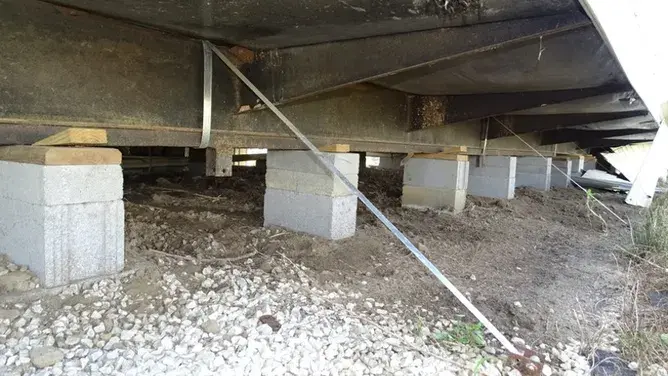
Tie-down systems use steel straps or cables attached to the home's main frame, connected to ground anchors driven deep into the soil below. The anchors resist vertical uplift forces. The straps resist the lateral forces that push and pull the structure sideways during high winds.
Together, they function as a connected system that works under load. When one component fails, the others carry more than they were designed to handle. A corroded strap, a loose coupling, or a shifted anchor changes how the entire system performs under stress.
What a Mobile Home Tie-Down Inspection Covers
A professional inspection looks at every component of the system, not just what is visible from the outside.
Inspectors check all straps and cables for corrosion, fraying, kinking, and tension loss. Florida's year-round humidity accelerates rust faster than most homeowners expect. A strap that looks intact from a distance can have significant deterioration at connection points and where the strap contacts the frame directly.
The anchor hardware gets evaluated next. Couplings, turnbuckles, and the connectors that link straps to anchors are checked for proper seating and signs of wear. Loose hardware can turn what looks like an intact system into one that fails under the first real load.
The ground anchors themselves require the most careful attention. In sandy or frequently saturated Florida soil, anchors can gradually shift or lose holding capacity over time. A small amount of movement at the base reduces the effectiveness of the entire anchor point, sometimes without producing any visible warning signs above ground.
Manufactured home installation standards specify a required number of tie-downs based on home dimensions and local wind zone classification. A thorough inspection confirms whether your setup meets those requirements and flags anything that does not.
Tie-Downs and Hurricane Straps: Understanding the Difference
This is an area where homeowners often have questions, and the confusion is understandable.
Tie-downs, sometimes called anchor tie-downs, are the primary system that secures a mobile home to the ground. They are the main structural defense against wind uplift and lateral movement during a storm.
Hurricane straps are a secondary reinforcement that strengthens the connection between roof framing and wall framing. They are more commonly associated with site-built homes, though some manufactured home installations include additional roof-to-wall strapping as well. For most mobile homeowners, the anchor tie-down system is the primary focus before each hurricane season.
Why Florida's Conditions Raise the Stakes
Sandy soil and high groundwater levels affect how well ground anchors perform over the long term. Anchors installed years ago may have shifted gradually with each wet season. That cumulative movement can reduce holding capacity without any visible signs at the surface.
Florida also sits in one of the most active hurricane corridors in the country. Wind zone requirements here are more demanding than much of the Southeast. A tie-down system that meets minimum standards in a lower-risk region may be undersized for a coastal Florida location where storm intensity is significantly higher.
For homeowners in areas like Fort Myers and Naples, where storm tracks frequently make landfall, getting ahead of potential issues before the season peaks carries real weight.
Signs Your Tie-Downs May Need Attention
You do not need to wait for a scheduled inspection to notice warning signs. Some are visible with a simple walk around your home.
Look for rust, discoloration, or visible wear on straps and cables. Check whether any straps appear loose or have lost their tension. Examine the soil around anchor base plates for heaving, cracking, or any movement that was not there before.
If your home has shifted or settled noticeably since you last had work done, that can affect anchor performance even when there is no visible surface damage. Changes in door alignment or floor levelness sometimes indicate the home has moved in ways that matter to the anchor system.
Any of these signs are worth a professional evaluation before the season advances.
How Often Should You Get a Tie-Down Inspection
At minimum, tie-down systems should be evaluated once a year. The period before hurricane season is the most practical time to schedule it.
Beyond the annual check, certain events should trigger an immediate inspection. If your area took a direct hit or near-miss from a tropical storm, have the system assessed before the next event, even when no obvious damage is visible. Internal shifting and hardware stress are not always apparent from the outside.
New ownership is another trigger that often gets overlooked. Buyers of previously owned mobile homes frequently inherit systems that have not been inspected in years. A baseline evaluation at the time of purchase gives you an accurate picture of what you have, before the next storm tests it.
What Happens When a System Fails During a Storm
The consequences are not subtle.
At lower wind speeds, a compromised tie-down system can allow the home to shift or lift off its piers. That movement stresses plumbing connections, HVAC ductwork, and the floor structure in ways that create damage far beyond what is visible from the outside. What looks manageable on the surface can involve significant structural and mechanical repair costs underneath.
At higher wind speeds, a failed system can result in partial or total loss of the home. That is not a rare outcome in direct hurricane impacts for structures with aging or neglected anchor systems. Insurance claims filed after major storm events frequently show that the tie-down system had not been inspected in years. In most of those cases, the outcome could have been different.
Getting Ready Before the Season Peaks
Hurricane season builds slowly in June and July, then intensifies from August through October. That early window is exactly when scheduling inspections and any needed repairs makes the most practical sense.
A thorough anchor and tie-down evaluation takes a few hours. If repairs or replacements are needed, getting them on the calendar in early summer is far simpler than trying to find a qualified contractor when the season reaches its peak.
Our team serves mobile homeowners across Florida. You can review our full range of services or visit the FAQ page for answers to common questions about what an inspection involves and what to expect.
To schedule your free inspection, contact us directly. No obligation. Just a clear picture of where your home stands before the season advances.


