What Florida Code Requires for Mobile Home Tie-Downs

Most people don't think about tie-down requirements until they're buying a home, selling one, or dealing with an insurance question after a storm. Then they find out that Florida has specific standards for how a mobile home is anchored, and that not every home actually meets them.
The rules exist because Florida sits in one of the most storm-exposed parts of the country, and a mobile home is only as safe as its connection to the ground. Understanding what the state expects, and how to tell whether your home measures up, is worth doing before a problem forces the question.
Why Florida Regulates This So Closely
A mobile home rests on a steel frame supported by piers, not a permanent foundation poured into the ground. That design is what makes anchoring so important, and it's why the state treats it as a safety requirement rather than an optional upgrade.
In high winds, an unanchored or poorly anchored home can shift, rock, or lift in ways a site-built house never would. Florida's exposure to hurricanes and tropical storms means the consequences of a failed system are severe, so the installation standards are more demanding here than in much of the country.
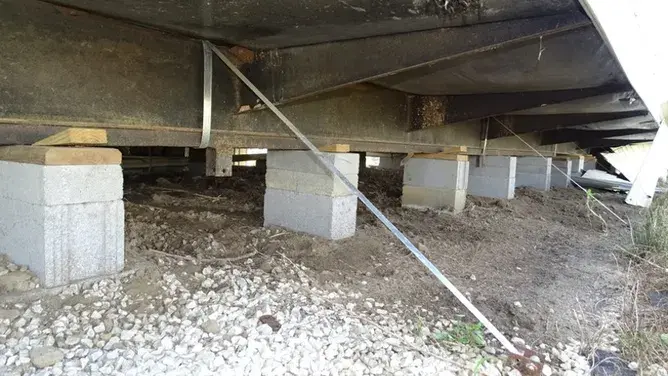
The anchor and tie-down system is the specific thing those standards govern. It's the network of straps and ground anchors that holds the home down and resists the forces a storm puts on it.
What the Requirements Actually Cover
Florida's installation standards address more than just whether a home has tie-downs. They cover how many, how they're placed, and how they're secured.
The required number of anchors depends on the size of the home and the wind zone it sits in. A larger home needs more anchor points than a smaller one, and homes in higher wind zones need more than those in lower ones. Florida falls into the higher wind zone classifications, which means the requirements here are stricter than the national minimum.
The standards also address the type of anchors and straps, how they connect to the frame, and how deep the ground anchors are set. A system that technically has straps but uses the wrong hardware, insufficient anchor depth, or improper spacing may still fall short of what the code requires.
Because these details matter, installation and major anchoring work are meant to be handled by licensed professionals who know the current standards, not pieced together informally.
Wind Zones and Why They Matter Here
One of the biggest reasons Florida's requirements are more demanding is the wind zone system.
Manufactured homes are built and anchored to withstand specific wind speeds based on where they're installed. Much of Florida sits in the higher wind zones, which call for stronger anchoring than lower-risk regions inland or up north.
This becomes a real issue with older homes and homes that were moved. A home originally set up to a lower standard, or installed years ago before requirements tightened, can be under-anchored for its current location without the owner realizing it. The straps may look fine while the overall system is undersized for the storms it's actually likely to face.
How Settling and Time Affect Compliance
Meeting the requirements at installation doesn't guarantee a home still meets them years later. Conditions under the home change, and the anchoring can drift out of compliance without any obvious sign.
Florida's sandy, frequently saturated soil allows ground anchors to shift or lose holding capacity over time. An anchor that was set correctly can gradually move as the soil around it goes through wet and dry cycles, which reduces how well it holds.
Settling plays a part too. When a home shifts and needs leveling, that movement can affect the tension and alignment of the tie-down system. Straps corrode in the humidity, hardware loosens, and a system that once met the standard can fall below it purely through age and exposure.
That's why compliance isn't a one-time box to check. It's something worth verifying periodically, especially on an older home.
When Compliance Comes Up
There are a few common situations where tie-down requirements suddenly matter, and it helps to be ahead of them rather than caught out.
Buying or selling a mobile home is a frequent trigger. A buyer inheriting an older home often has no record of when the anchoring was last checked, and a baseline evaluation at purchase gives an accurate starting point. Sellers sometimes find that anchoring needs to be brought up to standard before a sale goes through.
Insurance is another. After major storm events, claims are sometimes affected by whether the home met anchoring requirements, and some insurers ask about it directly. Having a system that meets the standard, and documentation to show it, puts you in a stronger position.
And of course, storm season itself is a natural time to confirm the system is compliant and sound, which overlaps with a pre-season tie-down inspection covering the physical condition of the hardware.
How to Know Where Your Home Stands
You can catch some warning signs yourself with a look around the base of the home. Rust or wear on straps, straps that have lost tension, and soil movement around the anchor plates all suggest the system needs a closer look.
What you can't easily judge on your own is whether the number, placement, and specification of the anchors actually meet Florida's current requirements for your home's size and wind zone. That takes someone who knows the standards and can measure the system against them.
A professional evaluation confirms both the physical condition and whether the setup meets code, so you know not just that the straps are intact, but that the whole system is doing what the state requires of it.
Getting It Verified
If you're buying, selling, dealing with an insurance question, or simply unsure when your anchoring was last checked, having the system evaluated against current requirements is the way to get a definite answer.
Our team works with mobile homeowners throughout Florida and offers free inspections with no obligation. You can review our full range of services or check the FAQ page for common questions about anchoring and tie-down work.
To find out whether your home meets the standard, contact us here. It's better to know before a storm or a sale makes it urgent.