What Causes Soft Subfloors in Lakeland Mobile Homes

You notice it with your feet before your eyes. A spot near the kitchen sink that gives a little. A patch of hallway that feels softer than the rest. In Lakeland, those soft spots are one of the most common calls we get, and they almost always start with moisture underneath the home. Mobile home subfloor repair is what puts a floor like that right, but only once the source is dealt with.
Lakeland's setting has a lot to do with why this happens here. Sitting among dozens of lakes in the humid center of the state keeps the ground damp and the crawl space working against moisture much of the year.
Living Between the Lakes
Lakeland earned its name honestly. Polk County is dotted with lakes, and all that surface water keeps humidity high and the water table close to the surface across much of the area.
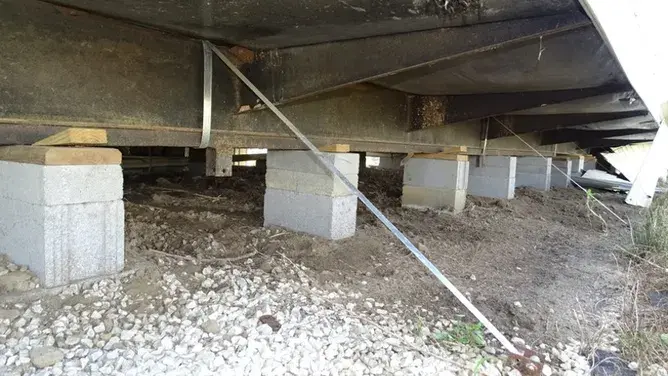
For a mobile home, that means the ground underneath releases moisture steadily. Unlike a quick coastal storm, this is a constant, low-level dampness that presses upward into the crawl space day after day.
The subfloor, sitting just above that space, is right in the path of it. Over time, steady moisture is exactly what breaks the material down.
How Floor Problems Start Underneath
The subfloor is the structural layer beneath your flooring, usually plywood or particle board, carrying the weight of everything in the room. When it stays dry, it holds firm. When moisture reaches it, the material weakens.
In Lakeland's humidity, the most common culprit is a failing or aging vapor barrier. When ground moisture isn't blocked from rising, it works into the subfloor continuously rather than just during rainy stretches.
Plumbing leaks add a second path, saturating one area from a specific source. Poor crawl space airflow makes both worse by trapping humidity against the underside of the floor.
Reading the Floor
Most owners catch subfloor trouble through how the floor feels rather than how it looks.
Soft or spongy spots, especially near bathrooms, kitchens, and exterior walls, are the usual first sign. Pressing down with your foot, you feel a give that isn't there elsewhere. A floor that bounces slightly underfoot, particularly toward the center of a room, points to weakened support below.
Visible sagging or a dip in one area is a more advanced sign. So is a musty smell drifting up from certain rooms, which usually means moisture and possible mold have been building in the crawl space for a while.
Why the Barrier and the Subfloor Go Together
Subfloor damage and moisture control are really one problem viewed from two sides. The subfloor rots because moisture reaches it, and moisture reaches it because something below stopped holding it back.
That's why replacing floor material without fixing the source is a short-term patch. The new material sits in the same damp conditions and heads down the same road within a few years.
A proper approach looks at the whole crawl space, since the same moisture behind soft floors is often behind broader crawl space problems across humid parts of Florida.
Repair, Not Just Cover-Up
A sound repair starts by finding both the damaged area and the moisture causing it. Skipping that step is why some floor repairs don't last.
Once the source is handled, whether that's the vapor barrier, a plumbing fix, or airflow, the damaged subfloor sections are cut out cleanly. Technicians take care not to disturb more of the surrounding structure than necessary.
New material is then installed and secured to the floor joists, matched to the original thickness for a level, even surface. Where joists themselves have been affected, that structural work happens before the new subfloor goes down.
What the Finished Job Should Feel Like
When it's done right, the floor feels solid again, with no give and no dip. The flooring above, whether vinyl or laminate, goes back over a stable base.
More importantly, because the moisture source was addressed, the repair holds. That's the difference between fixing a floor and simply postponing the next soft spot.
Because Lakeland's conditions are humid year-round, staying ahead of moisture is what keeps a repaired floor sound over the long term.
Getting a Lakeland Floor Checked
If you've felt soft spots, a bounce underfoot, or noticed a musty smell from certain rooms, a crawl space inspection is the right first step. It shows what's happening below before you commit to anything.
We work with mobile homeowners throughout Lakeland and Polk County, and you can find local details on our Lakeland page. You can also see our full range of services, including subfloor repair, or check the FAQ page.
To schedule a free inspection with no obligation, contact us here. In a place as humid as Lakeland, catching a soft floor early keeps a small repair from spreading across the room.