Why Naples Mobile Homes Need Strong Tie-Downs

Naples sits right where the Gulf's worst weather tends to arrive. Homeowners here don't need reminding what a major storm can do, and for a mobile home, the anchoring system is the single thing standing between the structure and the wind. Mobile home tie-downs in Naples aren't a formality. They're the difference between a home that rides out a storm and one that doesn't.
The same coastal setting that makes Naples beautiful is hard on that anchoring over time. Sandy soil and salt air both work against the system quietly, so a setup that looked fine years ago may not be doing its job now.
The Gulf Coast Puts Naples Homes in the Path
Collier County sits in one of the higher wind zones in the state, and recent seasons have made the risk plain. Storms moving in off the Gulf bring both extreme wind and surge, and low coastal elevation leaves little margin.
A mobile home rests on piers and a steel frame, not a poured foundation, which makes it far more exposed to wind uplift than a site-built house. The anchor and tie-down system is what resists that uplift and the sideways forces a storm generates.
In a place this exposed, the standard the system is held to matters. Anchoring that would pass in a low-risk inland area can be undersized for what Naples actually faces.
What the System Does Under Load
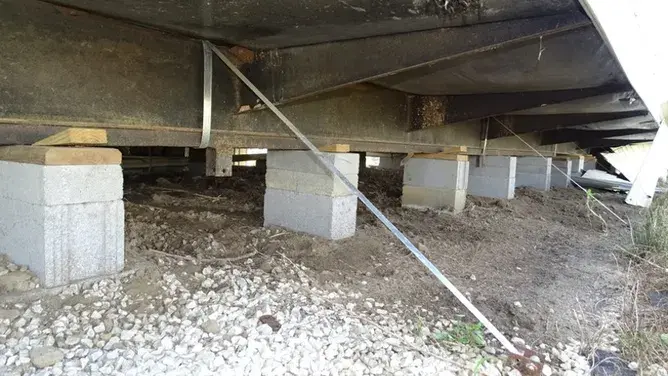
Tie-downs work as a connected system, not a set of independent parts. Steel straps run from the home's frame to ground anchors driven deep into the soil.
The anchors resist the vertical pull that tries to lift the home. The straps resist the lateral push that tries to shove it sideways. Under storm load, they share the force, and each depends on the others holding.
When one component weakens, a corroded strap, a loose coupling, a shifted anchor, the rest take on more than they were designed for. That's how a system that looks intact can still fail when it's tested.
Why Coastal Soil Loosens Anchors
Naples sits on sandy, often saturated soil, and that's demanding on ground anchors over the long term. Sand doesn't grip an anchor the way denser ground does, and a high water table keeps it shifting.
An anchor set correctly years ago can gradually lose holding capacity as the soil around it moves through wet and dry cycles. The change happens below the surface, so there's often no visible sign that the anchor isn't holding the way it should.
That slow loss of grip is why coastal anchoring deserves periodic checking rather than a one-time install and forget.
Salt Air Works on the Hardware
The other coastal factor is corrosion. Salt in the air speeds up rust on the metal straps, cables, and connectors that make up the system.
A strap can look sound from a few feet away while carrying real deterioration at the connection points and where it meets the frame. In a salt-heavy environment like Naples, that corrosion moves faster than most owners expect.
Since the anchoring shares the underside of the home with the vapor barrier and other components, salt-driven wear on the under-home system is worth looking at as a whole, not just strap by strap.
When Anchoring Falls Short of the Standard
Meeting requirements at installation doesn't guarantee a home still meets them years later. Between soil shift and corrosion, a system can drift below what Collier County's wind zone calls for without any single dramatic failure.
Older homes and homes that were moved are the most common concern. A setup built to an earlier or lower standard can be under-anchored for its current location, with straps that look fine masking a system that's simply undersized for the storms it will face.
A professional evaluation checks both the physical condition and whether the number, placement, and depth of anchors meet the current standard for your home.
Checking Before the Next Season
The practical time to handle this is before a storm is on the way, not when one is two days out. Anchoring and any needed repairs are far easier to schedule in the quiet stretch of the year.
A walk around the base of the home can catch some warning signs on your own. Look for rust or wear on the straps, straps that have lost tension, and soil movement or heaving around the anchor plates. Any of those is worth a closer look.
What you can't easily judge is whether the whole system still meets code for a Naples wind zone. That takes someone measuring it against the standard.
Getting a Naples System Evaluated
If you're unsure when your anchoring was last checked, or you've noticed rust or loose straps, having the system evaluated is the way to know where you stand before the next season.
We serve mobile homeowners throughout Naples and Collier County, and you can find local details on our Naples page. You can also review our full range of services or check the FAQ page for common questions about anchoring.
To schedule a free inspection with no obligation, contact us here. On the Gulf, it's far better to know your home is secure before a storm puts the question to it.